

Time tracking often looks like a simple process. Someone logs hours, a manager checks them and finance processes them in the administration or reporting. In practice, that is exactly where many small errors arise: missing project codes, duplicate entries, late approvals, loose exports and dashboards that no longer match reality.
Automating does not mean pushing everyone into a new system. It starts with sharpening the process flow. Where do hours originate? Who may change them? When are they final? And how do they reliably reach finance, invoicing, planning and management reporting?
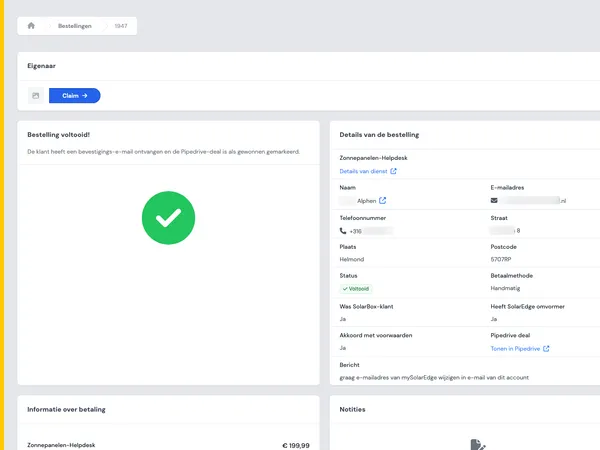
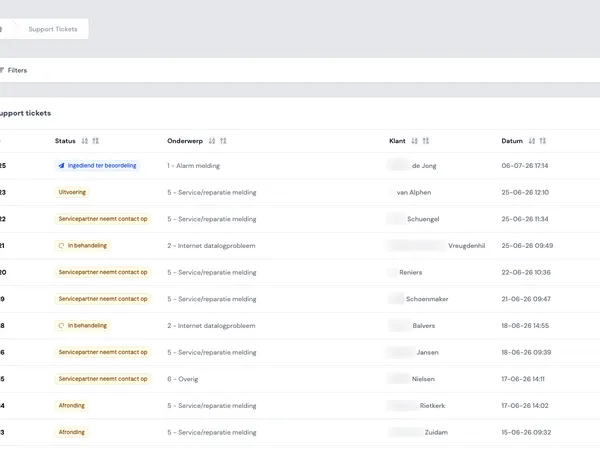
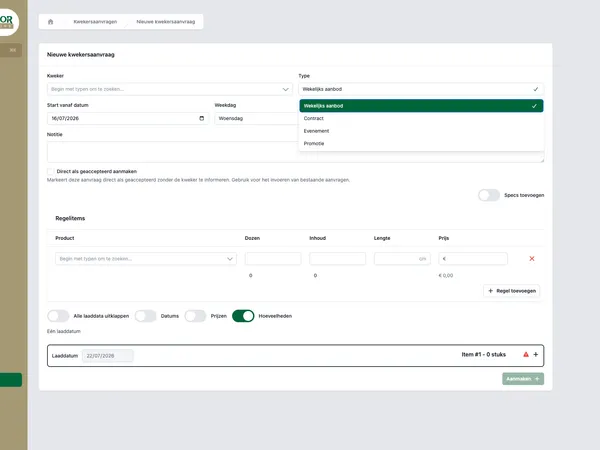
At House of Devs we see time tracking as part of a larger business process. In the XIXO case, that comes together in a solution with time tracking, financial administration and a central dashboard. This article shows which choices matter if you want to set up such a flow properly.

Automation starts with reliable source data, not with the dashboard itself.
Why time tracking becomes error-prone
Most problems do not arise because employees do not want to log their hours. They arise because the process contains too many separate steps. Hours sit in one tool, corrections in emails, rates in spreadsheets and reports in a separate file. As soon as someone has to copy something over by hand, delays and the risk of errors follow.
Common signals are:
- Finance waits at the end of the month for missing hours.
- Project leads keep their own spreadsheets next to the central system.
- Hours have been logged, but not linked to the right customer, assignment or cost centre.
- Approvals happen outside the system.
- Dashboards show figures that are corrected later.
The result is that teams spend a lot of time checking, chasing and correcting. Automation should reduce that checking work. Not by blindly pushing everything through, but by making rules and exceptions explicit.
Start with the source data
A good hours flow stands or falls with the quality of the source data. Hours are more than just a date and a number. For finance and reporting, customer, project, activity, employee, contract agreement, rate, status and approval are often relevant too.
So first make clear which data is required and where it comes from. Some data is filled in by the employee. Other data should come from project administration, a planning system or a supplier environment. The less someone has to choose from free-text fields, the smaller the risk of inconsistency.
A practical set of basic questions:
- Which projects and activities may be used?
- Which roles may log, change or approve hours?
- When is an hours entry draft, submitted, approved or processed?
- Which fields are needed for invoicing or internal cost allocation?
- Which exceptions occur often, such as corrections or post-calculation?
This step sounds administrative, but it is technically important. Only when the source data is right can you make integrations, dashboards and automatic processing reliable.

A finance integration only works well when statuses, roles and validations are clear.
Roles and validation make the difference
Automating time tracking is largely about trust. Finance does not want to check everything again, but does need to know that the input is correct. You solve that with clear roles and validation rules.
An employee, for example, only needs to be able to log hours on active projects they are assigned to. A project lead can approve hours or send them back with a reason. Finance only sees approved hours that are ready for further processing. That way, checking moves to the moment the error occurs.
Examples of useful validations
- An hours entry cannot be submitted without a project, activity and date.
- Hours on closed projects are blocked or flagged separately.
- Deviations from the planning trigger a warning.
- Corrections after approval require a new audit trail.
- Duplicate entries on the same activity and date are flagged.
The trick is not to build too many rules at once. Start with the validations that directly prevent finance problems. Then expand based on real exceptions from practice.
Connect time tracking to administration and other systems
Time tracking only becomes truly valuable when the data flows through without extra manual work to the systems that rely on it. Think of accounting, invoicing, project reporting, payroll or management dashboards.
In many organizations, suppliers, purchase orders or external systems are also part of the same chain. The same challenge applies there: data has to flow through unambiguously, validated and traceably. In our article on automating purchase orders with supplier APIs we work that out from the purchasing side. The same principle applies to hours, but with different source data and approval moments.
A good finance integration answers at least these questions:
- Which hours may be sent on?
- At what moment do they become final?
- Which fields does finance need?
- How are errors reported back?
- Where does the audit trail stay visible?
That last point is important. Automation must not become a black box. If an hours entry cannot be processed, it should be clear why. For example because of a missing cost centre, a different customer code or a project status that is no longer active.

Integrations prevent duplicate work, provided error handling and the audit trail are set up properly.
From loose reports to a real-time hours dashboard
Many dashboards are really just nicely designed exports. They look professional, but the underlying data is still updated by hand. That leads to discussions about the figures. Is project management looking at the same hours as finance? Have corrections been processed yet? Are draft hours included or not?
A real-time hours dashboard only helps if it uses the same definitions as the process. Think of clear filters for period, status, project, customer, team and activity. Also show which hours are still waiting for approval. Then you steer not only on reporting after the fact, but also on process quality.
In our article on replacing Excel with a real-time dashboard we show why this difference matters. A dashboard is not a loose end point. It is a window onto the process behind it.
For time tracking, these are often useful insights:
- Logged hours per project and period.
- Outstanding approvals per team or project lead.
- Deviations between planning and actuals.
- Hours ready for finance or invoicing.
- Corrections after processing.
Starting small without getting stuck later
The best start is usually not a big project in which every exception is solved up front. Start with a well-defined flow that delivers value. For example one team, one type of project or one integration with finance. That way you test roles, validations and data quality in practice.
A logical approach looks like this:
- Map the current hours flow, including spreadsheets and manual checks.
- Determine which data finance needs at a minimum.
- Define statuses, roles and approval moments.
- Automate the most important validations.
- Only pass approved hours on to administration or reporting.
- Add dashboard insights that make process problems visible.
That order prevents you from building a dashboard on messy data, or making a finance integration without clear status logic. If you tighten the process first, you can expand faster afterwards.
When custom software makes sense
Off-the-shelf software can work fine if your process closely resembles what the tool already supports. Custom software becomes interesting when time tracking is part of a broader chain. For example with specific roles, project structures, supplier data, financial administration or dashboards that have to match exactly how your organization works.
That does not mean everything has to be rebuilt. The value often lies precisely in connecting existing systems, automating validation and building one central overview. That fits how we look at automating business processes: less manual work, fewer loose files and more control over the chain.
Want to know where your hours process has the most to gain? A short process analysis is often enough to make the bottlenecks visible. You can get in touch if you would like to talk through a practical first step.